The conversation around AI-assisted programming has become impossible to ignore. Some developers see AI agents as the biggest productivity breakthrough in decades, while others warn that they are creating new risks around quality, understanding, and accountability.
I find myself in an unusual position within this discussion. I lead an engineering team professionally, but I also experiment with AI coding tools during my own projects outside of work. I have experienced both sides of the transformation: the excitement of building something in a few hours that previously would have required days, and the concern that comes afterward when maintaining and understanding that output becomes someone else’s responsibility.
For a long time, I avoided making strong statements about AI development tools. Instead, I spent time testing them, observing how engineers use them, and paying attention to the broader arguments from people across the industry.
Recently, several perspectives on AI coding have emerged from completely different viewpoints. Some writers argue that AI development is overhyped and risks reducing engineers to supervisors of machine-generated output. Others believe that AI agents represent a fundamental shift in how software will be created. Between these extremes are researchers and practitioners trying to understand what is actually changing.
What stands out is not the disagreement itself. The surprising part is how much common ground exists beneath those disagreements. Many people are looking at the same evidence, seeing the same problems, and simply reaching different conclusions about what those changes mean.
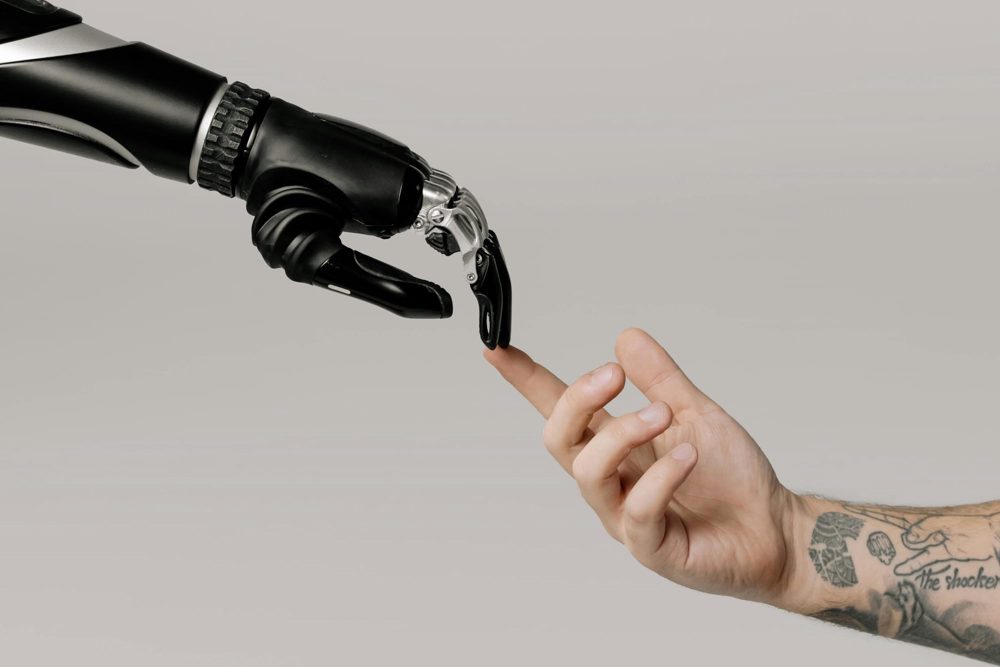
One of the clearest examples is the ongoing productivity debate.
Many studies show that developers using AI tools are completing more work. Pull requests are being created faster, more tasks are being finished, and engineers often report significant time savings. However, those gains frequently come with new challenges. Review cycles become longer, generated code requires more inspection, and teams spend more time validating whether the output is actually correct.
The pattern is consistent across multiple reports: AI has not removed work. Instead, it has shifted where the effort happens.
The time previously spent writing every line of code is increasingly being replaced by time spent defining requirements, reviewing generated solutions, testing assumptions, and correcting mistakes. The bottleneck has moved from production to verification.
This explains one of the biggest contradictions in AI development today. Developers often say they are saving many hours every week, yet their overall workload does not necessarily decrease. The hours gained from faster implementation are frequently absorbed by coordination, debugging, and reviewing AI-generated changes.
The same pattern appears in software quality. AI can quickly produce solutions that look correct, but the difficult part remains determining whether those solutions actually fit the larger system. A generated function may work perfectly in isolation while creating problems elsewhere because the AI does not fully understand the broader context.
This leads to the central question of the AI coding era: if machines can produce code faster, where does human expertise provide the most value?
The answer appears to be moving away from typing code and toward shaping the conditions under which code is created.
Some developers have embraced this transition by treating AI agents almost like junior engineers. They focus less on writing individual implementations and more on creating systems that guide, test, and evaluate machine-generated work.
In this model, the developer becomes responsible for architecture, requirements, constraints, and feedback loops. The AI handles execution, while humans provide direction and judgment.
Other developers remain concerned because this new workflow introduces a different type of risk. When people stop writing code directly, they may gradually lose their understanding of how the system works. Reviewing code requires a different skill from creating it, and there is a danger that engineers approve solutions they no longer fully comprehend.
This issue has been described as “comprehension debt”: the gap between how much code an AI can generate and how much of that code humans can realistically understand.
The danger is not necessarily that AI produces obviously broken software. The bigger concern is that it produces convincing solutions that are subtly wrong. If engineers become too comfortable accepting outputs they cannot explain, they may slowly lose ownership of the systems they maintain.
This is where the debate becomes more complicated. AI is not simply replacing coding tasks. It is changing the relationship between humans and software creation.
For some engineers, this feels empowering. They can explore ideas faster, build prototypes quickly, and spend more time on higher-level decisions. For others, it feels like moving away from the craft that attracted them to programming in the first place.
The future of software development may depend less on whether AI tools become powerful enough to write code and more on whether teams develop the discipline required to use them responsibly.
The real transformation is not that machines can generate software. The transformation is that the location of human effort is changing.